Gigatronics 6060A Signal Generator · Volume 3
Gigatronics 6060A — Vol 3: Calibration, Gotchas & Reference
Cal/drift, the legacy-support question, bench-discipline notes, and resources
3.1 Calibration, drift & legacy support
The Gigatronics 6060A series is specified to hold its amplitude accuracy across the full 0–50 °C operating range to within ±1.5 dB (6061A) or ±1.5 dB (6062A above 1 MHz) on the broad output range. At 25 °C ± 5 °C the spec tightens to ±1.0 dB. Frequency accuracy is tied entirely to the reference oscillator; for the standard crystal the spec is <±10 × 10⁻⁶ total across the temperature range. NIST-traceable calibration intervals for this class of instrument are conventionally 12 months in production ATE service and 24-36 months for hobby/bench use — the actual drift over 24 months on a stable bench is usually well under spec, but the calibration sticker is what gives you legal standing if you’re issuing test reports.
Who calibrates these in 2026? Gigatronics Incorporated as a standalone company was acquired by Spectrum Control / Astronics in 2013, and the 6060A-series production line was discontinued at that point. Calibration and repair support for the line moved to third-party calibration houses:
- Tektronix Service Solutions (Beaverton, OR) — the ex-Fluke / Gigatronics 6062A is one of the legacy instruments their cal lab still accepts.
- Keysight Technologies metrology services — calibrates “any vendor” instruments at higher cost but with NIST traceability.
- Transcat (Rochester, NY) and CalTek (regional sites) — independent ISO 17025 cal labs that handle vintage RF gear.
- Local university or government cal lab — for hobby use, a campus EE department or municipal weights-and-measures office sometimes has a spare 8902A measuring receiver and can do a courtesy cal.
Replacement parts (display tubes, IEEE-488 transceiver chips, the LM394 audio-pair on the modulation board) are mostly available on the secondary market (eBay, Apex Waves, used-equipment dealers) but the obsolete custom ASICs that drive the synthesizer are not in production — meaning a synthesizer-board failure on these units is potentially a junk-the-unit event. The good news: the synthesizer is rugged and most failures in 6062As that come into shops in 2026 are electrolytic-capacitor failures in the power supply (easy fix, common reservoir caps), front-panel display dimming (the VFD vacuum-fluorescent panels lose brightness over decades but still work), and stuck relays on the output attenuator (also field-serviceable with a small soldering iron and patience).
TBD — confirm the last calibration date stamped on the unit(s), ideally the sticker on the rear panel and any internal log. For amateur receiver-alignment work the absolute amplitude accuracy is rarely the load-bearing spec (the SINAD measurement is ratio-based, not absolute), so a unit 3-5 years out of cal still gives credible results — but the absolute frequency reference, which is the actually-load-bearing spec, drifts predictably with crystal aging and is worth verifying against a GPSDO before any high-credibility measurement.
3.2 Gotchas & bench-discipline notes
A grab-bag of operational notes from working with these instruments:
-
The “RF OFF” annunciator means two different things. It can mean (a) you’ve pressed the RF OFF key to mute the output (recoverable by pressing it again) or (b) the reverse-power protection has tripped (recoverable by power-cycling — not by pressing RF OFF). When the annunciator is flashing, it’s the tripped state. The manual is clear on this; field operators sometimes aren’t.
-
Internal modulation oscillator is a fixed 400 Hz or 1 kHz, not a free-running tone generator. For test conditions that require a different audio rate (300 Hz for SSB carrier-suppression measurement, 2.5 kHz for amateur SSB peak audio, 5 kHz for FM deviation calibration at the channel edge) drive the EXT MOD input from a separate audio generator. The EXT input expects 1 V peak for the indicated modulation index; impedance is nominally 600 Ω (560 Ω with both EXT AM and EXT FM simultaneously enabled). Drive it from a low-impedance source (an HP 651B, a function generator with 50 Ω out, or a soundcard-based AWG with an in-line buffer) so the source impedance doesn’t drag the modulation index off-spec.
-
The instrument has a 1-hour warm-up to within 1 ppm for the standard crystal oscillator (or 20-30 minutes for the oven options). Power it up and let it sit for an hour before any precision measurement; the manual’s warm-up spec is not aspirational. For an oven-equipped 6062A the warm-up state is annunciated in STATUS mode — wait for the “OVEN OK” indicator before relying on the frequency.
-
Memory retains state for ~2 years with power off (per the datasheet). After two years of storage the 50-slot setup memory loses its NV state; if you’ve programmed in a custom sequence of test points and the instrument has been off the bench for a while, plan to re-enter or restore from a controller dump.
-
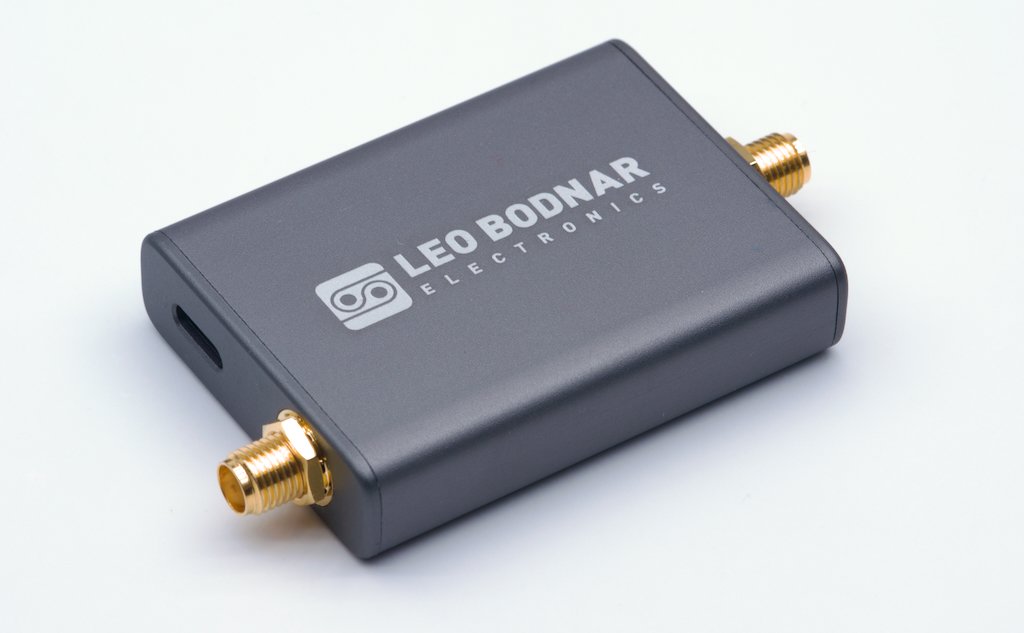
Rear-panel reference connector accepts 1, 2, 2.5, 5, or 10 MHz sine or square wave input at 0.3–4 V peak-to-peak, 50 Ω nominal. If you have a GPSDO (HP Z3801A, Trimble Thunderbolt, Leo Bodnar mini-GPSDO) on the bench, driving the 6062A from the GPSDO’s 10 MHz output buys you full GPS-disciplined frequency accuracy at zero additional cost — the standard crystal becomes irrelevant.
-
The 6060A series predates digital modulation modes. It does AM, FM, ΦM, and pulse — period. It cannot generate I/Q modulation, OFDM, P25, DMR, FM-coded ATIS, or any other complex waveform. For modern digital-mode receiver testing (which is what most of the radios in this project’s Vols 8, 13, 14 actually use day-to-day), you’d need a vector signal generator (Keysight ESG/PSG, R&S SMW) instead. The 6062A is still the right tool for analog NFM/AM/SSB receiver alignment, harmonic measurement, IF stage characterization, and front-end intermod work, all of which are universal across analog and digital radios because the IF and front-end stages are common.
-
The case fan is audible but not loud — these are bench instruments, not lab whisper-quiet boxes. The fan draws air through the side-panel vents; keep the side clearance at least 4 inches.
3.3 Bench-verification TBDs
Items that need bench-verification against the actual unit(s) before any of the above can be treated as authoritative:
- Exact model — 6061A vs 6062A, or both (most likely one of each based on the manuals folder contents, but not confirmed)
- Branding era — Fluke-label, Gigatronics-label, or Fluke chassis with Gigatronics retrofit
- Reference-oscillator option — standard crystal, medium-stability oven (Option 132), or high-stability oven (Option 130)
- Last calibration date stamped on the cal sticker
- Rear-panel RF output option — front-panel RF OUT (standard) vs Option 830 (rear-panel RF OUT and modulation inputs, N-connector on rear)
- GPIB cable + USB adapter on hand — Prologix, Keysight, NI, or none
- Operating hours if known (the instrument has an internal hour counter readable over IEEE-488)
3.4 When to reach for the Gigatronics
Table 1 — When to reach for the Gigatronics
| Use case | Instrument | Notes |
|---|---|---|
| Measure a receiver’s NFM/AM/SSB sensitivity at a calibrated input level | Gigatronics 6062A (or 6061A) | The canonical bench measurement. Pair with a SINAD analyzer and a known attenuator chain. See Vol 2 (Operating the Generator). |
| Align a scanner’s IF or RF stages | Gigatronics 6062A | Sweep a known input across the IF; peak the slug-tuned cans. The factory alignment procedure for the SDS100/SDS200 (Vols 13/14) calls for a calibrated-input signal source — this is that source. |
| Measure HF amplifier harmonic suppression at full output | Gigatronics 6062A + a spectrum analyzer or selective receiver | The 6062A is the input; the SA measures the output. Verify the XPA125B’s claimed −45 dBc harmonic suppression on 6m. |
| Two-tone IMD test on a receiver | Two Gigatronics units in master/slave mode, plus a hybrid combiner | The slave-mode tracking is what makes this fast. With only one unit, use an HP 8657B or equivalent for the second tone. |
| Generate a pulse-modulated RF signal for radar-receiver testing | Gigatronics 6062A (6061A cannot do pulse) | DC–16 MHz pulse rate, sub-15 ns rise/fall, 80 dB on/off. |
3.5 Resources
Manuals (in 02-inputs/manuals/):
gigatronics/Giga-tronics 6060A Series Datasheet.pdf— the canonical spec sheet, covers 6061A and 6062A jointlygigatronics/Giga-tronics 6060A Series Manual.pdf— operator manual (mostly image-based)gigatronics/Giga-tronics 6062A Instruction Manual.pdf— 6062A operator manualgigatronics/Gigatronics 6062A Service Manual.pdf— service manual (long; full alignment + theory-of-operation; carries the Fluke warranty page confirming the design lineage)gigatronics/6062a.pdf— alternate operator manual (manualslib upload, includes the Fluke-era warranty material)
Vendor / authoritative web references:
- Gigatronics legacy: Gigatronics Inc. was acquired by Spectrum Control / Astronics (NASDAQ: ATRO) in 2013; the 6060A-series production discontinued. Legacy support inquiries go through Astronics Test Systems at https://www.astronics.com/test-systems. Calibration via Tektronix Service Solutions, Keysight Metrology Services, Transcat, or CalTek.
Comments (0)